
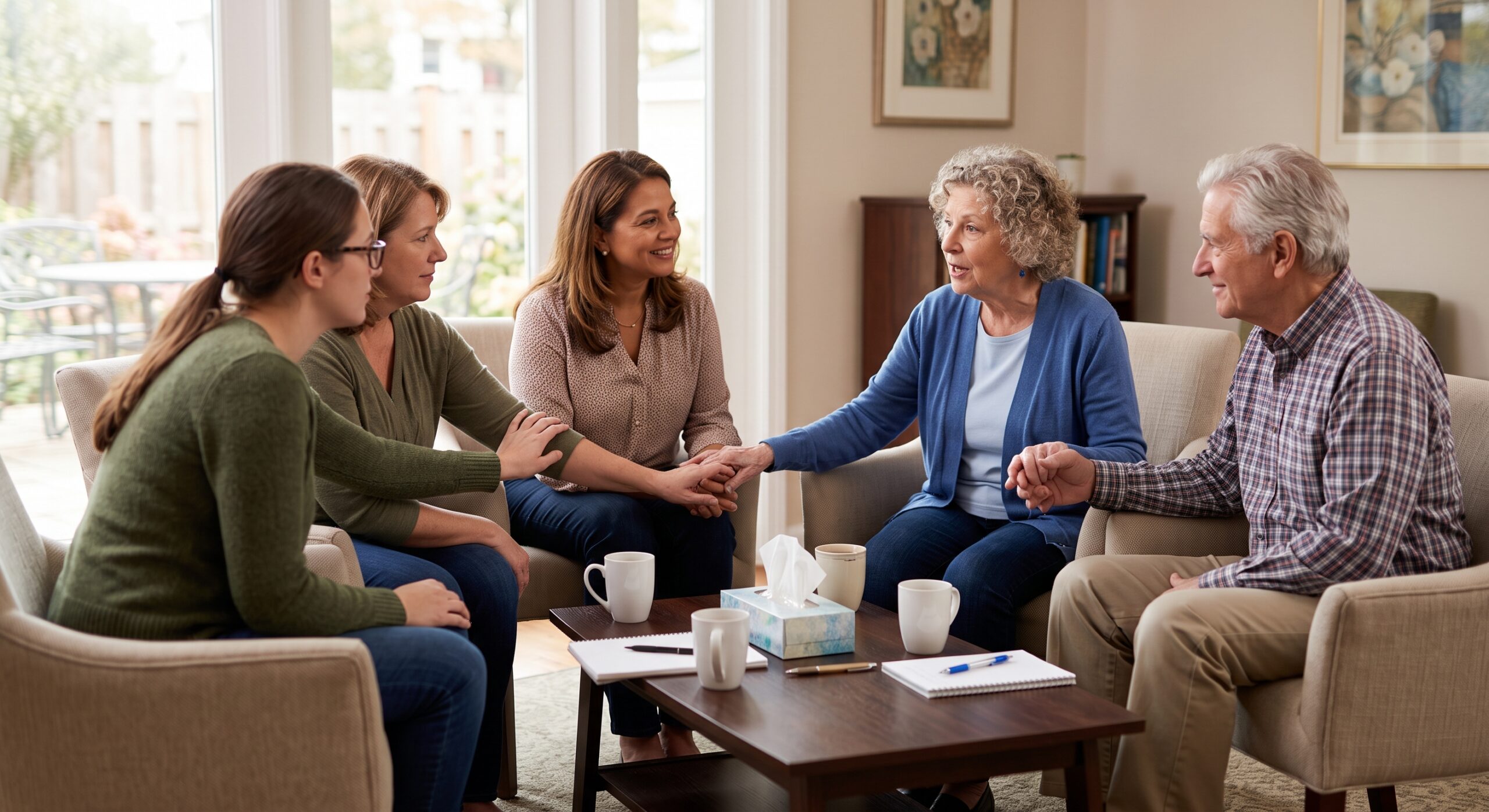
Dementia changes more than memory. It changes routines, relationships, communication, and the emotional rhythm of an entire family.
While much of the public conversation focuses on the person living with dementia, millions of care partners quietly carry the daily weight of caregiving behind the scenes. They manage medications, appointments, safety concerns, emotional stress, and the gradual transformation of someone they love.
For many families, the experience can feel isolating. Friends may not fully understand what dementia caregiving involves. Healthcare systems often focus on clinical outcomes instead of the emotional realities families face at home.
Even highly capable caregivers can find themselves exhausted, overwhelmed, and unsure where to turn next. That is why caregiver support groups matter so deeply. Across the country, families are searching for meaningful connection, practical education, and emotional reassurance.
In Connecticut, this demand continues to grow as more families navigate Alzheimer’s disease and related dementias. A strong caregiver support group Connecticut families can trust is no longer a secondary resource. It has become an essential part of dementia care itself.
At LiveWell, caregiver support is not treated as an afterthought. It is woven directly into the organization’s philosophy of whole-person dementia care. Through virtual gatherings, community programs, education, and relationship-centered support, LiveWell helps families feel less alone while giving them tools to move forward with greater confidence and resilience.
The result is something larger than a traditional support group. It is a community built around dignity, understanding, and the belief that families deserve support as well.
Why Dementia Caregiving Can Feel So Overwhelming?
Dementia caregiving is unlike many other caregiving experiences because it evolves continuously. A family member may appear physically healthy while simultaneously losing cognitive abilities, emotional regulation, or independence.
Care partners are often forced to adapt again and again as symptoms progress. One day may involve repeated questions and confusion. Another may involve wandering, sleep disruption, or emotional withdrawal. Over time, caregivers frequently experience chronic stress, anticipatory grief, anxiety, and burnout.
According to the Alzheimer’s Association, family caregivers provide billions of hours of unpaid dementia care every year in the United States. Yet many caregivers report feeling unprepared for the emotional and logistical demands involved. This is where support groups become transformative.
A well-designed Alzheimer’s support group CT families can rely on creates space for caregivers to speak honestly without fear of judgment. It allows people to ask difficult questions, share frustrations, and learn from others walking through similar experiences.
Support groups also help normalize emotions that many caregivers keep hidden, including guilt about needing time away, fear about disease progression, sadness over changing relationships, anger, exhaustion, or emotional numbness and uncertainty about future decisions.
When those emotions remain isolated, they often intensify. When they are acknowledged within a supportive community, caregivers can begin to feel grounded again.
The Growing Need for Caregiver Support in Connecticut
Connecticut families are experiencing the same demographic shifts occurring nationwide. People are living longer, dementia diagnoses are increasing, and more family members are taking on caregiving responsibilities while balancing careers, parenting, and financial pressures.
In communities throughout the state, caregivers are actively searching for dementia caregiver support that New Haven and the surrounding areas can provide. Many are looking for resources that go beyond pamphlets or crisis intervention. They want practical guidance and human connection.
What makes this need especially urgent is that caregivers themselves are at risk. Research consistently shows that dementia caregivers experience higher rates of stress-related illness, depression, and social isolation compared to the general population.
Support systems help interrupt that cycle. A meaningful caregiver group does more than provide emotional comfort. It can improve caregiver confidence, reduce feelings of isolation, and help families navigate care decisions earlier and more effectively.
At LiveWell, this understanding shapes the entire approach.
How LiveWell Reframes Dementia Support?
Traditional dementia care models often focus heavily on loss. Conversations tend to revolve around decline, limitations, and clinical management. Families can begin to feel like every interaction is centered on what dementia takes away.
LiveWell approaches things differently.
The organization’s philosophy emphasizes possibility, connection, creativity, and quality of life. Instead of reducing people to a diagnosis, LiveWell centers the lived experience of both individuals and families.
This reframing matters because caregivers are not simply managing tasks. They are trying to preserve relationships, maintain dignity, and find moments of meaning within difficult circumstances.
Many of the organization’s educational resources reflect this human-first philosophy. The goal is not to offer false optimism or minimize challenges. Instead, it is to help families recognize that support, joy, and connection can still exist alongside dementia.
That same philosophy carries directly into LiveWell’s caregiver support programs.
What Makes LiveWell’s Caregiver Support Groups Different?
Many support groups focus primarily on discussion alone. While conversation is important, caregivers often need something broader. They need education, community, validation, and practical strategies they can use in everyday life.
LiveWell’s programs are designed to provide all of those elements together.
The organization’s care partner support group has drawn strong participation through virtual sessions, reflecting the growing demand for accessible dementia family support Connecticut caregivers can join from home.
This virtual format is especially valuable for caregivers who cannot easily leave a loved one unattended or travel long distances. At the same time, LiveWell is continuing to expand opportunities for in-person connection because face-to-face relationships remain deeply important for many families.
Rather than treating caregivers as passive observers, LiveWell creates environments where participants actively engage, learn, and support one another. These groups often help caregivers learn communication strategies for dementia-related behaviors.
Moreover, it also helps understand disease progression more clearly and explore stress management techniques to navigate changing family dynamics. The support can also provide guidance to discover local care resources and educational programs, and build relationships with people who genuinely understand their experiences.
Importantly, the atmosphere is not purely clinical. Caregivers are welcomed as people first. Conversations acknowledge both hardship and humanity. There is room for vulnerability, practical problem-solving, laughter, and emotional honesty.
That balance can make an enormous difference for families who have spent months or years feeling emotionally depleted.
Why Virtual Support Groups Matter More Than Ever?
In the past, support groups were often limited by geography, transportation, or scheduling barriers. Virtual programming has changed that dramatically. For dementia caregivers, online access can be life-changing.
A caregiver may be unable to leave home because their loved one becomes anxious when left alone. Another may live in a rural area without nearby dementia services. Others may simply feel emotionally exhausted and unable to manage additional travel demands.
Virtual support groups remove many of those obstacles. LiveWell’s online programming allows caregivers across Connecticut to connect from familiar environments while still participating in meaningful discussions and educational experiences.
This accessibility matters because support is most effective when it is consistent. Families are far more likely to remain engaged when participation feels realistic and sustainable within daily life.
Virtual groups also create an important emotional bridge for caregivers in earlier stages of the dementia journey. Many families hesitate to seek support initially because they fear stigma or feel uncertain about what dementia caregiving will involve.
Online participation can feel less intimidating and more approachable during those first steps. As a result, caregivers often access help earlier rather than waiting until they are already overwhelmed.
Support Groups Help Caregivers Feel Seen Again
One of the most painful aspects of dementia caregiving is the gradual erosion of identity. Caregivers can become so consumed by responsibilities that they stop recognizing their own emotional needs.
Support groups help restore visibility.
When caregivers hear others describe similar experiences, something powerful happens. They realize they are not failing. They are responding to an extraordinarily difficult situation shared by many others. That recognition reduces shame and isolation.
It also creates space for caregivers to rediscover themselves outside the constant demands of caregiving. Emotional support becomes more than reassurance. It becomes a reminder that caregivers deserve care too.
This perspective aligns closely with LiveWell’s broader mission. The organization consistently emphasizes that dementia care should strengthen human connection rather than narrow it. Families are not expected to navigate this experience alone.
Education is a Critical Part of Dementia Support
Emotional support matters deeply, but education is equally important. Many families receive a dementia diagnosis with little guidance about what comes next. They may understand the medical term but feel completely unprepared for the practical realities ahead.
Support groups that incorporate education help caregivers build confidence over time. At LiveWell, educational conversations may include topics such as:
- Understanding behavioral changes
- Creating supportive home environments
- Improving communication approaches
- Managing caregiver stress
- Planning for future care needs
- Navigating community resources
This knowledge helps reduce fear because uncertainty often intensifies emotional stress.
When caregivers better understand why certain behaviors occur, they can respond with greater patience and effectiveness. Instead of interpreting dementia-related actions as intentional resistance or personality change, families begin to see the neurological realities behind them.
That shift can improve relationships and reduce emotional conflict within the home.
Building Community Around Dementia Instead of Silence
For decades, dementia carried a profound social stigma. Families often kept diagnoses private, avoided conversations, or withdrew from community life altogether. That silence created isolation.
Organizations like LiveWell are helping reshape this narrative by creating visible, compassionate spaces where families can engage openly and honestly. Support groups become part of a larger cultural shift. They signal that dementia is not something families should hide from or face alone.
Community-centered dementia support also helps challenge harmful assumptions about aging and cognitive change. Instead of focusing exclusively on decline, programs emphasize adaptation, creativity, connection, and continued engagement.
This approach reflects a growing movement within dementia care that prioritizes living well alongside diagnosis rather than defining life solely through limitations. LiveWell’s work in Connecticut stands as part of that broader transformation.
How Families Can Know When It’s Time to Seek Support
Many caregivers wait too long before reaching out for help. They often believe they should be able to manage independently or worry that asking for support means they are struggling too much.
In reality, seeking support early is one of the healthiest decisions caregivers can make. Some signs that additional support may help include feeling emotionally exhausted most days, with increasing social isolation, and difficulty in managing stress or anxiety.
It often also shows up as being overwhelmed by care decisions that cause changes in sleep or physical health. It leads to growing frustration or emotional numbness, which can result in a feeling of disconnect from friends or family.
Support groups are not only for moments of crisis. They are preventive, stabilizing resources that help caregivers maintain emotional resilience over time.
Joining a caregiver support group Connecticut families trust can create a healthier caregiving experience not only for the caregiver, but for the person living with dementia as well.
The Future of Dementia Care Must Include Families
The future of dementia care cannot focus only on diagnosis and treatment. It must also prioritize the well-being of families, care partners, and communities.
Caregivers are the invisible infrastructure of dementia care across the country. Without adequate support, families face emotional burnout, health complications, financial strain, and social isolation. Organizations like LiveWell demonstrate what a more compassionate model can look like.
Instead of separating clinical care from emotional well-being, LiveWell integrates education, support, community, and human dignity into a single philosophy. Their caregiver programs recognize an essential truth that healthcare systems too often overlook.
When caregivers are supported, everyone benefits.
The person living with dementia experiences greater stability and connection. Families feel more confident navigating challenges. Communities become more informed and compassionate. Most importantly, caregivers no longer feel invisible.
LiveWell’s approach to dementia caregiver support New Haven and surrounding Connecticut communities reflects a broader reimagining of dementia care itself. Through virtual care partner groups, educational programming, and relationship-centered support, LiveWell helps caregivers feel empowered rather than alone.
As dementia diagnoses continue to rise nationwide, support systems like these are becoming essential components of healthy caregiving. They remind families that while dementia changes life profoundly, connection, dignity, and community remain possible throughout the journey.
FAQ
What is a caregiver support group for dementia?
A dementia caregiver support group is a structured community where family caregivers can share experiences, receive emotional support, learn practical caregiving strategies, and connect with others navigating similar challenges related to Alzheimer’s disease and other dementias.
Are there virtual dementia caregiver support groups in Connecticut?
Yes. Organizations like LiveWell offer virtual caregiver support opportunities that allow Connecticut families to participate from home, making support more accessible and flexible for caregivers with demanding schedules.
Who should join an Alzheimer’s support group in CT?
Anyone caring for a loved one with Alzheimer’s disease or another form of dementia can benefit from joining a support group. This includes spouses, adult children, relatives, and close friends involved in caregiving responsibilities.
How do support groups help dementia caregivers?
Support groups help caregivers reduce isolation, manage stress, gain practical caregiving knowledge, and build emotional resilience. They also create opportunities to connect with people who genuinely understand the realities of dementia caregiving.
Why is caregiver support important in dementia care?
Caregiver well-being directly affects the quality of care a person with dementia receives. Supporting caregivers helps reduce burnout, improve emotional health, strengthen relationships, and create more sustainable long-term care environments.